

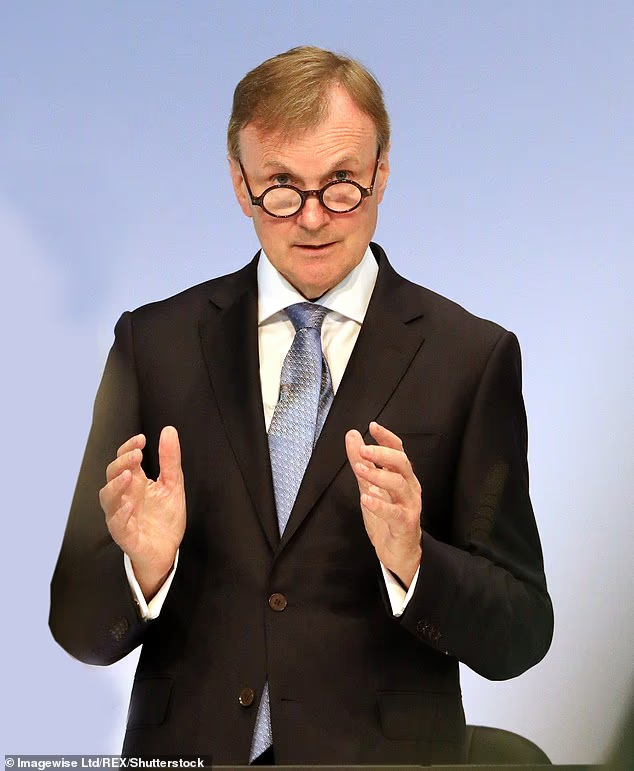
The chairman of Marks & Spencer has said that ‘rarely in the history’ of the retailer has Britain been ‘less friendly to growth and investment’.
In scathing comments made in the High Street chain’s annual report, Archie Norman said that the company’s role was to ‘ride the waves’ of higher taxes.
But he said that smaller firms have suffered more and this has resulted in the continued ‘decline’ of local High Streets.
The business has now ’emerged stronger for the experience’ of a cyber hack that disrupted online sales for weeks last spring, Norman added.
But the crisis did cost chief executive Stuart Machin in bonuses, with his pay sinking to £4million last year, compared to £7million the year before.
Norman’s remarks came as retailers also warned the Government’s proposals to offer workers a set number of ‘guaranteed hours’ will mean they are forced to hire fewer people around busy periods like Christmas.

Archie Norman has joined a chorus of bosses in sounding the alarm over high taxes for British retailers
In his chairman’s statement, Norman said that given ‘macro-economic and regulatory pressures’ faced by the group, ‘it makes sense to keep a conservative balance sheet during this phase of accelerated growth and investment’.
He added: ‘We have of course some headwinds: there has rarely in the history of M&S been a time where the regulatory environment has been less friendly to growth and investment and our tax burden increased substantially in the year.
‘Our role is to sail into the wind and ride the waves. The impact has however been felt more keenly by smaller competitors and the result is reflected in the continued decline of many high streets and town centres across the country.’
Retailers which have struggled to keep shops open this year so far include big names such as River Island, Radley, Poundland and former WH Smith shops now operating as TG Jones.
A slew of closures has added to concerns over rising youth unemployment levels, with bosses complaining that high costs mean it is difficult to justify hiring younger people.
Minimum wages rose in April – including an 8.5 per cent hike for those aged between 18 and 20 from £10 to £10.85 an hour – at the same time that many small shops faced increases to business rates.
It comes as the sector is still reeling from wage hikes and higher national insurance contributions that came into effect last April.
And now conflict in the Middle East has sparked fears of an even tighter consumer squeeze as energy bill increases loom while prices at the petrol pumps have already gone up.
The retail sector is facing a similar situation to the aftermath of Russia’s invasion of Ukraine in 2022 and rising costs are likely to lead to higher prices in shops, according to the British Retail Consortium (BRC).
DIY INVESTING PLATFORMS
AJ Bell
AJ Bell
Easy investing and ready-made portfolios

Hargreaves Lansdown
Hargreaves Lansdown
Free fund dealing and investment ideas

interactive investor
interactive investor
Flat-fee investing from £4.99 per month

Freetrade
Freetrade
Investing Isa now free on basic plan

Trading 212
Trading 212
Free share dealing and no account fee
Affiliate links: If you take out a product This is Money may earn a commission. These deals are chosen by our editorial team, as we think they are worth highlighting. This does not affect our editorial independence.

