

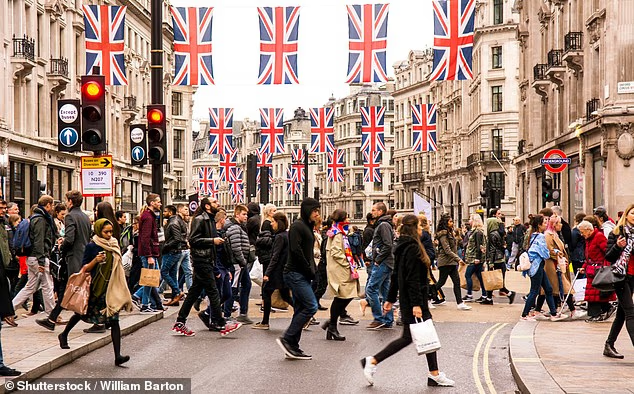
Andy Burnham is being urged to support independent shops through a root-and-branch overhaul of hated business rates.
Shopkeepers want the incoming government to adopt a new ‘hybrid’ model involving a 2 per cent levy on online sales and a 37 per cent cut for bricks-and-mortar firms.
The British Independent Retailers Association (BIRA) branded the current rates system ‘the most unfair tax in Britain’.
Writing for the Daily Mail online, BIRA chief executive Andrew Goodacre said the levy punishes shops on the High Street ‘simply for existing’.
He said ‘the time for tinkering’ was over and demanded full-blown reform.
Keir Starmer and Rachel Reeves have faced a fierce backlash since their botched reform of business rates last year, which came as firms also faced higher national insurance bills and wages.
Shopkeepers had hoped for a dramatic reform that would see the playing field levelled between their premises and the huge out-of-town warehouses operated by online giants.
But many small shops will instead see their rates increase over the next three years.

Labour’s botched business rates reforms have hammered Britain’s high streets
Burnham has already pledged to cut business rates and last month said that High Streets could become ‘a symbol of Britain’s renaissance’.
With pressure mounting on the government to act, BIRA has become the latest business group to throw its support behind a new campaign called the Real Rates Reform Alliance, which launches on July 14.
‘Business rates have remained the constant headache because they penalise businesses simply for existing,’ said Goodacre.
He warned that retailers are sometimes discouraged from investing in improving or expanding a shop because it can lead to higher rates.
This is because of the way business rate bills are calculated using a property’s rateable value and a government-set multiplier.
Goodacre said the system goes against the government’s pledge to ‘champion growth’ and is incredibly difficult for small shopkeepers, who have adapted to changes in consumer behaviour.
Many of his members have ‘reinvented themselves’ in order to compete as customers also shop online, Goodacre said.
Retailers need urgent action and meaningful reform but the current Government has failed to deliver the ‘transformation’ needed, he added.
He said: ‘Many independent retailers are facing significant increases in their own bills over the coming years as revaluations and changes take effect.
‘Instead of the permanent support they were promised, many small businesses will be paying substantially more.’
Goodacre said he is backing the hybrid business rates proposal as it recognises that ‘the economy has changed beyond recognition since business rates were introduced in 1990’.
Slashing rates for shops and taxing online sales is ‘not about punishing online retail’, he added.
‘Britain’s economy needs successful digital businesses just as much as it needs thriving town centres. It is about creating a level playing field,’ he explained.
Ros Morgan, chief executive of Heart of London Business Alliance, which represents over 500 businesses and is part of the Real Rates Reform Alliance, added: ‘Independent retailers are some of the hardest hit by the latest changes to business rates.’
She said that Burnham ‘has a unique opportunity to embrace the fundamental reform that Labour promised in its election manifesto but hasn’t delivered so far’.
She added: ‘The business rates system was designed for a pre-digital economy and doesn’t reflect the way business works today. We need to levy the playing field so that all businesses pay their share.’
Business rates punish companies ‘simply for existing’ – the time for tinkering is over
By Andrew Goodacre, chief executive of the British Independent Retailers Association
I am often asked one simple question: why do business rates provoke so much anger among independent retailers?
The answer is equally simple. Because they are probably the most unfair tax in Britain.
I have been involved with the British Independent Retailers Association since 2018, and throughout that time business rates have consistently been one of our top three policy priorities. Other crises have come and gone. We battled through Brexit. We survived Covid. We have wrestled with soaring inflation, rising wage costs and endless regulation.

BIRA boss Andrew Goodacre
But business rates have remained the constant headache because they penalise businesses simply for existing.
Think about it. If your business makes no profit, you still pay business rates. Unlike corporation tax, there is no relationship between what you earn and what you owe.
If you employ nobody, you still pay business rates. Unlike employers’ National Insurance, there is no recognition of the jobs you create. Even if you own your premises outright and pay no rent, the taxman still demands his share.
Most perversely of all, if you invest in your shop to improve it, expand it or make it more attractive for customers, your business rates can actually increase before those improvements have generated a penny of extra income.
How can any Government claim to champion growth while operating a tax that punishes investment?
Independent retailers have endured this unfairness while adapting to the biggest transformation the retail sector has ever experienced. Online shopping now accounts for around 35 per cent of retail sales, fundamentally changing consumer behaviour.
Despite these enormous structural changes, and the rise of big retail parks, independent retailers have refused to give up. They have reinvented themselves, embraced technology, diversified their offer and continued serving their communities with the personal service that no algorithm can replace.
But resilience alone is no longer enough.
We have reached a critical point where independent retailers need genuine support rather than warm words.
Successive governments have all insisted they ‘understand’ the problem with business rates. Rachel Reeves even claimed she had ‘transformed’ the system through reforms announced in the 2025 Autumn Budget. The promise was simple: permanently lower rates for retail, hospitality and leisure businesses, funded by a higher multiplier for larger properties.
The reality tells a very different story. Many independent retailers are facing significant increases in their own bills over the coming years as revaluations and changes take effect. Instead of the permanent support they were promised, many small businesses will be paying substantially more.
That is not transformation.
It is a system that continues to punish the very businesses ministers claim they want to protect.
This is precisely why BIRA is backing the hybrid business rate solution developed by the Real Rates Reform Alliance, a broad coalition of business organisations, including Heart of London Business Alliance and UKHospitality.
It starts from one undeniable fact: the economy has changed beyond recognition since business rates were introduced in 1990, but the tax system has failed to keep pace.
Today, property-heavy businesses shoulder most of the burden, while many online operators generate billions in sales from relatively modest property footprints. That imbalance is no longer sustainable.
The new alliance’s proposal is both practical and fair. It would reduce business rates on physical premises by around 37 per cent, returning the multiplier to its original 1990 level, while introducing a modest two per cent levy on eligible online sales, collected through the existing VAT system. The result would be a broader, fairer tax base that actually reflects the modern economy and is estimated to raise more revenue overall for the Treasury.
This is not about punishing online retail. Britain’s economy needs successful digital businesses just as much as it needs thriving town centres.
It is about creating a level playing field.
Independent retailers are not asking for special treatment. They simply want a tax system that recognises the value they bring. They invest in our communities, employ local people, support local suppliers and keep our town and city centres alive. Yet they continue to bear a disproportionate share of a property tax designed for a pre-digital age.
Andy Burnham is promising ‘growth in every postcode’. Delivering that will mean revitalising our high streets and backing small businesses, and not continuing to apply sticking plasters to a broken system.
The time for tinkering has passed.
Britain needs real business rates reform.
And the hybrid business rate offers the fairest, most credible place to start.
DIY INVESTING PLATFORMS
AJ Bell
AJ Bell
Easy investing and ready-made portfolios

Hargreaves Lansdown
Hargreaves Lansdown
Free fund dealing and investment ideas

interactive investor
interactive investor
Flat-fee investing from £4.99 per month

Freetrade
Freetrade
Investing Isa now free on basic plan

Trading 212
Trading 212
Free share dealing and no account fee
Affiliate links: If you take out a product This is Money may earn a commission. These deals are chosen by our editorial team, as we think they are worth highlighting. This does not affect our editorial independence.

