

Pub by Philip Howell (Bloomsbury £9.99, 160pp)
In 1970s Britain, a battle was raging. In pubs up and down the country, the fiercely fought lager wars were changing the way Britons drank forever.
Lagers brewed in Germany and Belgium were slowly replacing ale as Britain’s favourite tipple and purists were horrified to watch the retreat of their beloved bitter.
Battle lines were drawn, and the Campaign For Real Ale (CAMRA) was formed. ‘Lager louts’ were mocked and NFL signs (No F****** Lager) were hung in ale-only pubs.
However, this conflict between the Brits and the Germans (marginally less publicised than the other two) ended with the undisputed triumph of lager – which now accounts for 75 per cent of beer sales.
The lager wars were a short period in the long history of the English pub. In this concise but fascinating book, Philip Howell takes the reader on a journey through medieval taverns to the craft beer bars of the 21st century – cramming in terrific trivia along the way.
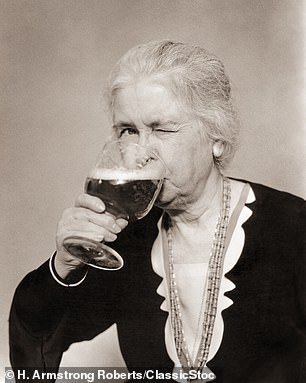
Did you know that, in the 14th century, alehouses were presided over by ‘alewives’, as brewing was considered women’s work? A surefire way to spot a tavern was by a broomstick (a symbol of women’s domestic labour) outside the door. Later, alewives became associated with vice and sin and the broomstick would symbolise their depiction as witches.

Job for a woman: Alehouses were presided over by ‘alewives’, as brewing was considered women’s work
Unsurprisingly, pubs have long been associated with vice and debauchery. The (thankfully) long gone days of animal baiting are still evident in some pub names like The Bull and The Dog and Duck.
Ye Olde Fighting Cocks in St Albans has not gone unnoticed by PETA, who demanded it change its name to Ye Olde Clever Cocks.
This would ‘help celebrate chickens as the intelligent, sensitive and social animals they are’. PETA even offered to host a name change party and promised to supply ‘delicious animal-free mock chicken’. The souls of the dear departed cocks of yesteryear would no doubt be touched by such a gesture but, bizarrely, PETA did not hear back from the landlord.
Animal baiting no longer draws in crowds, but over the years some landlords themselves have become major attractions. Kim De La Taste Tickell was the self-styled ‘squire’ of the Tickell Arms in Cambridgeshire.
In the 1970s and 80s he became famous for ‘defying what was just then being called political correctness’. Pinned on the front door was his list of people not welcome in his pub, including ‘loony lefties’ and ‘modern women’. Slightly unusually, ‘women playing with candlewax’ was strictly forbidden.
At closing time Mr Tickell would play opera at a deafening volume to clear out the customers and – if Mozart failed – he would release the hounds. Staying true to the medieval origins of the pub, Tickell was once arrested for chasing his customers down the street with a mace.
The honour of the rudest publican goes to Norman Balon, proprietor of Soho’s Coach And Horses, who was reputed to have once barred his own mother for talking too much.

London’s rudest landlord: Norman Balon outside his pub, The Coach and Horses
His retirement in 2006 was a sad day for publicans everywhere. Now that pubs across the country are rapidly closing down (more than one a day in 2024) landlords can perhaps no longer risk alienating their customers with eccentric rules or indiscriminate barring.
This book is partly a love letter and partly a plea to encourage us to get down to the local boozer, enjoy a tipple or two and maybe even brave an ale.

