

Shortly after my 30th birthday, I took an online DNA ancestry test.
I sent off my saliva sample and waited on tenterhooks for the results.
Finally they came back, matching me with a first cousin I never knew existed. She, in turn, connected me to a man I was to discover was my half-brother.
The results proved what I had long suspected: that the woman who raised me was not my mother. Instead, my biological mother was a stranger living more than 4,000 miles away in the US.
You may think I was distraught – after all, here was proof I’d been lied to for my entire life. Far from it; when I saw the results I punched the air and squealed with delight.
Why? Because, at last, my overwhelming instinct that I was the product of surrogacy was proven right.
I wasn’t a lunatic who had concocted some elaborate scenario to explain away the fact I’d never felt a bond with my mother, a woman who never told me the truth about my origins.
The distress and confusion I’d felt about my identity were not unfounded. It feels like barely a week goes by without us hearing that some celebrity has welcomed a child into the world via surrogacy.

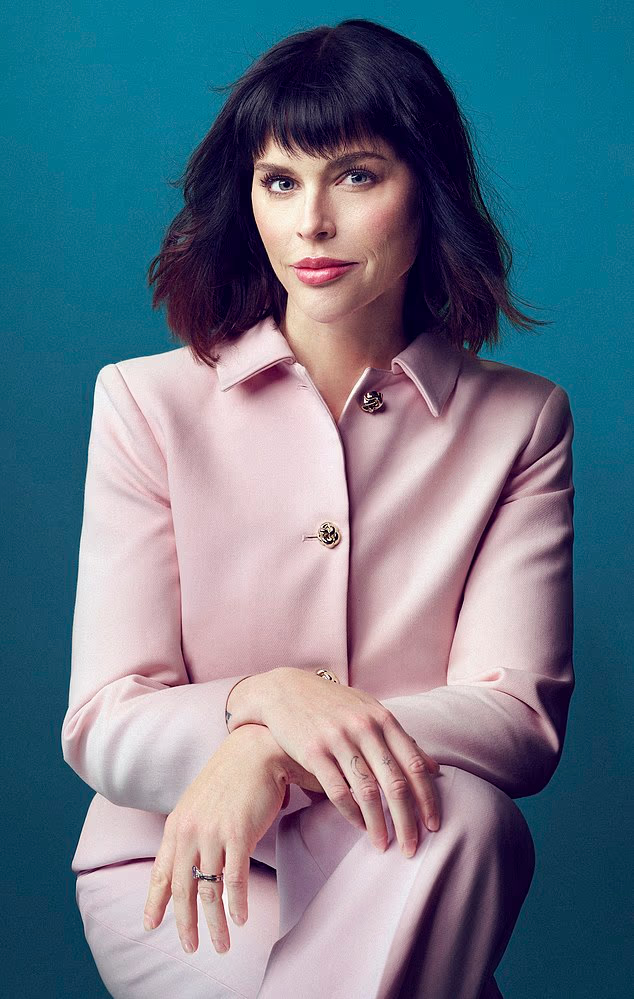
Olivia Maurel says that she always felt an ‘overwhelming instinct’ that she was the ‘product of surrogacy’ – and was proven right through a DNA test

Olivia says she was ‘always an extremely anxious and troubled child’ who ‘cried constantly’
The pictures will often show the new mother or father lovingly cradling their newborn in a hospital room. Their statement will thank their ‘wonderful’ surrogate for making their dreams come true.
What a beautiful story, you might think. But we never see that ‘wonderful’ surrogate, her services no longer required, exhausted and perhaps bleeding in another room.
Would it feel quite so joyous if we knew the detail of the contract the surrogate was made to sign? Or learnt that her decision to offer up her body for rent was driven by a desperate financial need?
And that’s before we get to the extraordinary emotional turmoil the baby may face as he or she grows up, as I know only too well.
As you may have gathered, I’m vehemently opposed to surrogacy. Despite owing my very existence to it, I won’t rest until we see a worldwide abolition of what I consider to be an appalling and abusive practice.
I was always an extremely anxious and troubled child. I cried constantly, bit my nails until they bled and pulled my hair out by the handful – behaviours I now attribute to the trauma of being torn away from my biological mother. She surrendered me the moment I was born, without so much as cradling me in her arms, having signed a legal document vowing to never speak about her experience or attempt to contact me.
Even though my parents never told me about my start in life, I instinctively knew something wasn’t right.
My parents are extremely wealthy. My father is Swiss and my mother is French and, growing up, we split our time between the south of France – where surrogacy is illegal – and Palm Beach in Florida. I was raised in sprawling homes, went to the best schools and on amazing holidays.
But while I had every material privilege, emotionally it was another story. I never had any doubts about my father – there was a physical resemblance (I was conceived using his sperm and the surrogate’s eggs) and an innate bond – but something was always ‘off’ with my mother, who largely outsourced my upbringing to a series of nannies.
She was clearly so much older than my friends’ mothers and refused to give her age when I asked. ‘I’m ageless,’ she would reply.
But why were there no pictures of her when she was pregnant with me? And why did she become angry and dismissive every time I questioned her? As a result, as far back as I can remember our relationship was distant and troubled.
By the time I entered my early teens I’d learnt to stop quizzing my mother in order to keep the peace, and I never spoke to my father about it. Yet my curiosity remained.
It was while rooting around at home that I found my mother’s passport, and saw she was nearly 50 when she supposedly gave birth to me. My birth certificate, meanwhile, revealed I was born in Louisville, Kentucky, a place we had no ties to. It made no sense. When I was around 17, my online searches revealed Louisville to be a major US hub for surrogacy… and the penny dropped. From that moment on I was certain I had been born via surrogacy and it had been covered up.
My head was buzzing with questions I was too scared to ask my parents. Who was my real mother? Why did she give me up? How much was she paid for me?

Despite owing my very existence to it, I won’t rest until we see a worldwide abolition of the appalling and abusive practice of surrogacy, says Olivia

Olivia grew up with extremely wealthy parents, with the family splitting their time between the south of France and Palm Beach in Florida
Unable to confide in anyone, my behaviour began to spiral out of control. I drank heavily, smoked marijuana and fell in with one bad crowd after another. Believe me there’s no shortage of rich, messed up kids to party with.
My parents sent me to a series of psychiatrists in a bid to turn me into the obedient daughter they wanted. I would always tell therapists ‘my mother isn’t my mother, my parents are lying to me’. But I’m pretty sure they didn’t believe me – and my turmoil only got worse.
Aged 19, I moved back to France to study law, where my behaviour became even more erratic.
I couldn’t talk to my family and I couldn’t bear to confront my feelings, so I poured alcohol down my throat to numb my pain.
One night, after attending a gig with a male friend, I passed out from drinking. He took me to his home, where he and another boy raped me.
I felt violated, ashamed and utterly broken, unable to face reporting what had happened. I quickly fell into another relationship with a twisted, controlling man who physically abused me. It all culminated in a suicide attempt aged 20.
I saw a psychologist and, for the first time, I felt understood. She encouraged me to leave my violent boyfriend and helped me see how toxic my relationship with my mother was.
But it wasn’t until I met my husband Matthias, aged 22, that my life really turned a corner.
He loved me unconditionally. Most importantly he and my mother-in-law believed my story and wanted to help me uncover the truth, find peace and move on.
We married when I was 24 and went on to have three children, Eleanor, now eight, Theodore, seven, and Auguste, five.
As I held each of my precious babies for the first time, the thought of giving them up to a stranger and never seeing them again was unbearable. I realised that for their sake I needed to find out who I really was.
And so, in 2022, I took that online DNA ancestry test – the test that proved I hadn’t invented this entire scenario, hadn’t lied to my friends, my husband and every therapist I’d seen. The test that changed my life in a way I could never have imagined.
Before taking it, I decided to tackle my father, telling him: ‘Dad, I know I was born via a surrogate. I know Mum didn’t give birth to me and you need to tell me because I deserve the truth.’
He replied: ‘I need to talk to your mother before I can tell you anything.’ It was enough for me; he had effectively confirmed my fears. I waited for him or Mum to come back to me with the full story but they never did.
Though the DNA test gave me confirmation, I didn’t confront my parents. It felt pointless; I had the answer they’d denied me for 30 years.
Having connected with my cousin, I learned I had five half-siblings, who confirmed their mother – my birth mother – had acted as a surrogate, possibly more than once.
My birth mother reached out to me on Facebook and we began to exchange messages. She sent me some photographs of herself as a younger woman. She looked just like me. She told me how I’d been conceived using her eggs and my father’s sperm, and the story of my birth, when she was 38. How as a newborn I turned my head to look at her after the nurses took me away to clean me up. She said it was a moment she never forgot. That though the surrogacy contract she had signed prevented her from trying to contact me, she had thought of me every day and hoped one day I’d find her.
I longed to ask why she agreed to do it but, realistically, it could only have been for the money.

Olivia’s birth mother reached out to her on Facebook and they began to exchange messages, explaining her story as a surrogate mother

My parents sent me to a series of psychiatrists in a bid to turn me into the obedient daughter they wanted, says Olivia
Her other children told me she had struggled with mental health issues for most of her life, meaning she should never have been a suitable candidate for surrogacy.
However, as I subsequently discovered through my campaigning work, surrogate agencies prioritise money above everything else.
My birth mother’s testimony left me reeling but also lit a fire in me. Since then, I’ve been determined to speak out about surrogacy using my voice as a child born this way.
Three years ago I made a TikTok video about my story that went viral and everything snowballed from there. I’m now Executive Director of the Casablanca Declaration, an international campaign for the abolition of surrogacy, and published my memoir In Search Of My Mother.
It’s about my life but also takes a dive into the murky side of the surrogacy business.
Since going public with my story many people have got in touch with me.
My godmother’s son reached out to say his family knew my parents were hiding something – it didn’t escape their notice that my non-pregnant mother and father travelled to the US, then returned to France a few weeks later with a baby! – but didn’t feel it was their place to say anything. Strangers have contacted me too. I hear from former surrogates racked with grief, guilt and regret about the baby they gave away. I’ve also had messages from others who, like me, were born this way and feel tormented.
When writing about the trauma adopted children are said to suffer after being taken from their birth mothers, some psychologists refer to this emotional and physical severance as ‘the primal wound’. I believe it’s the same for children born via surrogacy, a profoundly painful experience that disrupts the innate connections between birthing mother and child.
Yet the surrogate children who contact me are often afraid that if they talk about their struggles, the parents they love will hear it as a rejection. I understand that fear. There’s a huge conflict of loyalty; children born from surrogacy feel they need to be grateful.
In the UK only so-called ‘altruistic’ surrogacy is permitted, whereby only reasonable expenses can be paid to the woman carrying a child, rather than a fee. But, there aren’t enough altruistic UK surrogates to meet the demand, so parents source their surrogate from abroad, as there is nothing stopping them from travelling to a country where commercial surrogacy is legal and bringing a child back to the UK.
The number of surrogacy births has doubled in the UK in the past decade. Official figures show there were 5,763 applications for parental orders (transferring parentage from the surrogate to the intended parents) over this period. Campaigning group Stop Surrogacy Now UK estimate that 77 per cent of surrogate-born children are a result of an overseas commercial arrangement.
Emerging surrogacy markets include Ghana, Nigeria, Mexico and Colombia, where the women can get paid as little as £800. The clinics and agencies, naturally, make ten times that amount. In Colombia, 80 per cent of surrogates live in extreme poverty.
I hear people say that surrogates have free choice and do it because they want to help infertile couples. In which case, where are the comfortably off surrogates? Who is going to inject themselves with huge doses of hormones, suffer the side-effects and go through a pregnancy, only to give the child away, if they are not absolutely desperate?
A huge irony is that many of the celebrities who have had children through surrogacy claim to be feminists. Rubbish. You cannot call yourself one if you rent another woman’s body.
Of course, my views on surrogacy are coloured by my own experience, and many people have pointed out that just because I had a bad experience it doesn’t mean everyone else does.
But while I know that there are, of course, many happy surrogacy stories, where much-loved children are raised by affectionate, attentive parents, that doesn’t make the multi-billion dollar business of surrogacy right.
The fact surrogacy is illegal in many countries (including France, Spain and Italy) shows others share my concerns. Just this week Georgia’s government announced that it will discuss a proposed ban on surrogacy. This year alone we’ve had the disturbing case of American surrogate McKenna West, who refused the commissioning parents’ request to abort the baby she was carrying due to his heart defect.
Abortion clauses in surrogacy contracts are standard. Very often if the product isn’t perfect, the parents paying thousands don’t want it. If the surrogate refuses a termination she may be left to care for the disabled child herself.
Then there was the so-called ‘house of horrors’ case in California, where police found 14 surrogate children aged between six months and three years old, all acquired by a wealthy Chinese couple, who were last month charged with conspiracy to commit child abuse.
This is what happens when you allow people to purchase babies and put money before safeguarding. With surrogacy on the rise, I believe these stories are only going to become more commonplace unless we implement a ban.

Olivia believes that the trauma adopted children are said to suffer after being taken from their birth mothers, called ‘the primal wound’, is the same for children born via surrogacy
People will argue these are extreme cases and the majority of surrogacy stories have positive outcomes. The reality is, we just don’t know, because there have been no credible studies into how children born from surrogacy fare.
So, while my heart goes out to any woman who longs to have a child but is unable to, it’s now my life’s work to try to end surrogacy around the world, in all forms, with no half measures, even though it has come at a personal cost.
I am now completely estranged from the parents who raised me. They’ve made it clear that any relationship with me would be on the condition I stop telling my story, and I can’t agree to that.
I’m cut off from any inheritance, but I’m fine with that. I don’t want their money.
I love them and wish them well. I don’t even blame them. I think they just became obsessed with having a child at any cost and didn’t consider the consequences.
My husband still takes our children to see them, though. It would be extremely hypocritical of me, having battled so much trauma due to not knowing my heritage, to deny my children theirs. After all, my dad is their biological grandfather.
I’m no longer in touch with my birth mother, either. She is a troubled individual and things simply petered out, but I met my half brother in New York recently and it was one of the best days of my life.
We met at Grand Central Station, recognised each other across the crowded concourse and hugged each other tightly. In that moment, the splintered branches of my family tree felt restored.
Today, aged 34, I’m the happiest I have ever been. For so many years I was a traumatised child who needed to know who she was and have a purpose. Now I do.
- In Search of my Mother (Spinifex Press, £16.95) by Olivia Maurel is out now.
As told to CLAUDIA CONNELL

