

- Tales from the Mill by Simon Cooper (10C Publishing £22.50, 197pp)
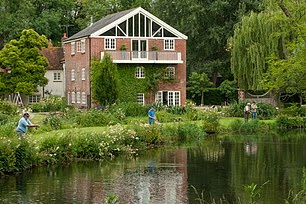
No one knows how old the corn mill at Nether Wallop in Hampshire is, but best estimates are that it is about 1,100 years old, probably built when Alfred the Great was king.
You can see why the owner, Simon Cooper, sees himself as just a speck in the mill’s long history, despite having lived there for over 20 years.

Corn Mill at Nether Wallop
Cooper first heard about the mill when a friend mentioned it was for sale but warned it was ‘a bit run down’. At the time, Cooper was running a fly-fishing business, largely from the back of his Land Rover.
Intrigued, he sneaked onto the property to have a look. The building, one of over 6,000 mills mentioned in the Domesday Book, was still grinding corn as late as the 1920s.
When Cooper saw it, the mill had been empty for several years and gave off the vibe of ‘a property abandoned just ahead of the bailiffs arriving’. Yet as soon as he saw it, and the crystal-clear water surrounding it, he knew he had found the place of his dreams. The restoration project took over two years. When he finally spent his first night at the mill he was woken by a pounding noise as ‘the water foamed, rushed, gurgled and slammed against the ancient brickwork … this has become the soundtrack of my life.’
This charming, episodic and somewhat elliptical book – Cooper doesn’t give away much about himself and we don’t even find out if he shares the mill with anyone – is like being transported back in time.
Nether Wallop sounds idyllic in a Downton Abbey sort of way, with its annual fete, a Christmas church service, a monthly quiz and regular litter-picking sessions. The rose-covered cottage where Joan Hickson’s Miss Marple lived in the 1980s TV series is located in the village.

Tales from the Mill is available now from the Mail Bookshop
Then there is the abundant wildlife around the mill, keenly observed by Cooper. The tame swan, Arthur, lives a solitary existence until a female swan arrives, and ‘by dusk, they had settled down to roost together for the night. I could hear the distant pitter-patter of little cygnet feet’. Sadly, it has all gone wrong by the next morning, leaving Cooper to wonder what dating crime poor Arthur could possibly have committed.
There are kingfishers and ducks and a family of otters who make their home at the mill. One young male otter is so confident that he lounges on the porch of Cooper’s fishing cabin and swims around the lake most mornings, seemingly unbothered by human company.
Purchasing a building as ancient as the mill is an act of faith and comes with endless challenges; getting flood insurance when you live surrounded by water is an annual battle.
The end of the book finds Cooper deciding it’s time to move on (naturally, he doesn’t say why), fully aware that leaving this magical place will be painful. Owning a water mill, he writes, ‘will envelop your soul’ in a way that few other things in life can do.

