

Britain has an overload of budgetary data. As the IMF noted in its recent annual inspection, too frequent fiscal events mean constant policy changes to meet targets.
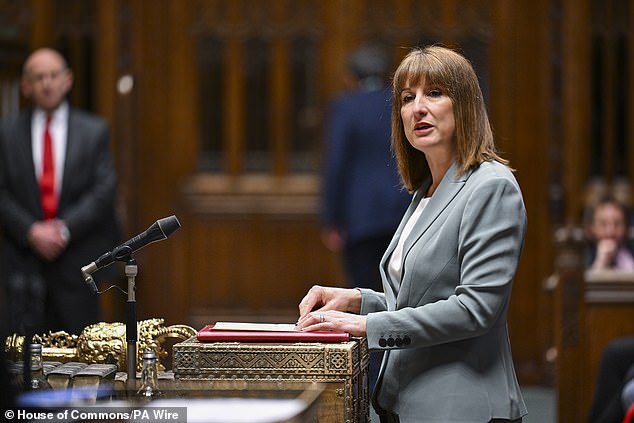
Chancellor Rachel Reeves is victim of her own rules in her determination not to be Liz Truss, who ruined the UK’s reputation for probity.
The rush to get on top of borrowing and debt was responsible for the ill-fated attack on winter fuel payments which is being reversed.
Similarly, the Government is now under pressure from the backbenches to pull back on welfare reforms, introduced in the spring statement.
The latest public sector borrowing data shows that in the first two months of the current financial year borrowing is not far off target. At £37.7billion it was less than the Office for Budget Responsibility predicted.
It would be terrific if one could say this is down to growing GDP. Reality is that Reeves swingeing increase to employers’ national insurance contributions brought in 22 per cent more to the Government coffers in May than a year earlier.

Chancellor Rachel Reeves has made decisions such as removing winter fuel payments based on meeting her rules on borrowing and debt that have backfired
Early months of the year often give a misleading reading. Tax receipts are boosted by the timing of capital gains payments. Spending by government departments has yet to ramp up.
The full impact of the Government’s interest rate bill is not felt. It is too soon for anyone in Whitehall to predict victory. The corollary of the stabilised public finances is May retail sales. The slump is a result of higher shop prices and rising uncertainty about jobs.
The real worry for a government backing a growth agenda is that it is not happening.
The just-published public spending review and infrastructure plans show that capital spending will climb to a peak of 3.9 per cent of output by 2027-28 but then fall back. It is unlikely to produce the transformation that Labour wants before the next election.
The Treasury is spellbound by the public finances.
That reflects a history of crisis management dating back to the 1976 sterling collapse and refreshed by the 2008 great financial crisis and the Truss episode.
I recall during the banking crisis being called by a senior Treasury official who cautioned against big bailouts because it might trigger a run on the pound.
The growth agenda doesn’t sit easily at the Treasury.
The Department for Business ought to be an expansion engine. It is hampered by a reputation as a parking space for sub-octane Cabinet ministers.
Incumbent Jonathan Reynolds is no more than a cypher for Downing Street where real polices are set. The long delays in launching an industrial-tech strategy are a case in point.
One must reach back to the Harold Wilson government of the 1960s to find a model for industrial innovation with the Department of Economic Affairs headed by George Brown. It eventually collapsed in a heap like its heavy drinking founder.
A growth agenda, building on science, tech and AI excellence, needs a powerhouse department of growth and secretary of state capable of resisting Treasury orthodoxy.
That person may not exist in a Labour government bereft of commercial experience and top-notch economic thinkers.
Andy Burnham, in exile in Manchester, shows signs of the kind of bravery required. That’s probably why political rivals would prefer he were not empowered.
DIY INVESTING PLATFORMS

AJ Bell
AJ Bell
Easy investing and ready-made portfolios

Hargreaves Lansdown
Hargreaves Lansdown
Free fund dealing and investment ideas

interactive investor
interactive investor
Flat-fee investing from £4.99 per month

InvestEngine
InvestEngine
Account and trading fee-free ETF investing

Trading 212
Trading 212
Free share dealing and no account fee
Affiliate links: If you take out a product This is Money may earn a commission. These deals are chosen by our editorial team, as we think they are worth highlighting. This does not affect our editorial independence.

